

When we talk about public charging, what are we really talking about?
For charger manufacturers, charging point operators, and site owners, the conversation often begins with power: 80 kW, 120 kW, 180 kW, or 240 kW.
For drivers, however, the question is much simpler:
Can I rely on this charging stop?
Real-world feedback from public charging sites equipped with LIVOLTEK MotionFast in Brazil offers a useful perspective. It shows what drivers value, what creates frustration, and what public charging infrastructure must deliver as electric mobility expands worldwide.
What drivers are actually telling us
Across public check-ins, drivers described positive charging experiences at charging points with Livoltek’s MotionFast DC chargers as:
- “Fast and fairly priced.”
- “Easy to access.”
- “Making electric travel possible across the region.”
- “Working perfectly at 120 kW, at a fair price.”
Drivers also valued convenient locations, coffee, water, restrooms, Wi-Fi, and somewhere comfortable to wait.
At the same time, some users reported lower-than-expected charging power, restricted access hours, insufficient weather protection, or difficulties with apps and customer support.
This combination of positive feedback and practical criticism provides the most meaningful customer insight:
Public charging is not a single product. It is a complete experience.
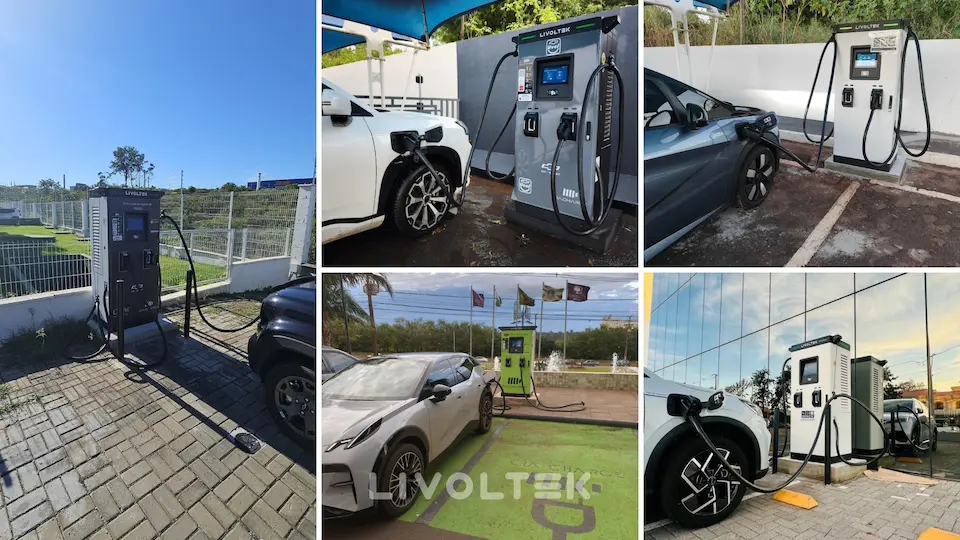
Rated power must translate into real-world flexibility
A charger’s maximum power remains important, but public charging sites do not all have the same requirements.
An urban commercial destination, a dealership, a fleet depot, and a highway charging hub may serve different vehicles, dwell times, and grid capacities.
LIVOLTEK MotionFast is available in 80 to 240 kW configurations, allowing operators to match charging capacity to the site’s actual use case. Its 150–1,000 V DC output range, 300 A output current, and two DC outputs with CCS2 configuration are designed to support a diverse range of EV charging requirements.
However, rated power is only one side of the charging session. A well-designed charger must therefore provide both power and clarity. Drivers need to understand how a session is progressing, even when their vehicle cannot accept the charger’s full rated output.
A simple interface reduces charging friction
When drivers arrive at a public charger, the process should feel intuitive.
MotionFast provides a 10.1-inch colour touchscreen, charging status LED indicators and user authorization through RFID or an app. These features help drivers understand the charger’s status, initiate a session, and follow charging progress more easily.
These details may appear small on a technical datasheet, but they have a direct impact on everyday usability.
Reliable charging also requires reliable connectivity
Public charging is both an electrical and digital service.
Drivers may rely on an app to find a station, verify its status, authorize a session or review charging information. Operators need visibility into equipment status and the ability to connect chargers to their charging management platforms.
MotionFast supports 4G and Ethernet connectivity, together with RS485, RS232 and CAN communication interfaces. It uses OCPP 1.6J and supports remote upgrades to OCPP 2.0.1, giving charging operators greater flexibility when integrating the charger into existing and future backend platforms.
Open communication standards are particularly important for growing charging networks. They reduce dependence on a closed ecosystem and make it easier for operators to scale, manage, and update their infrastructure over time.
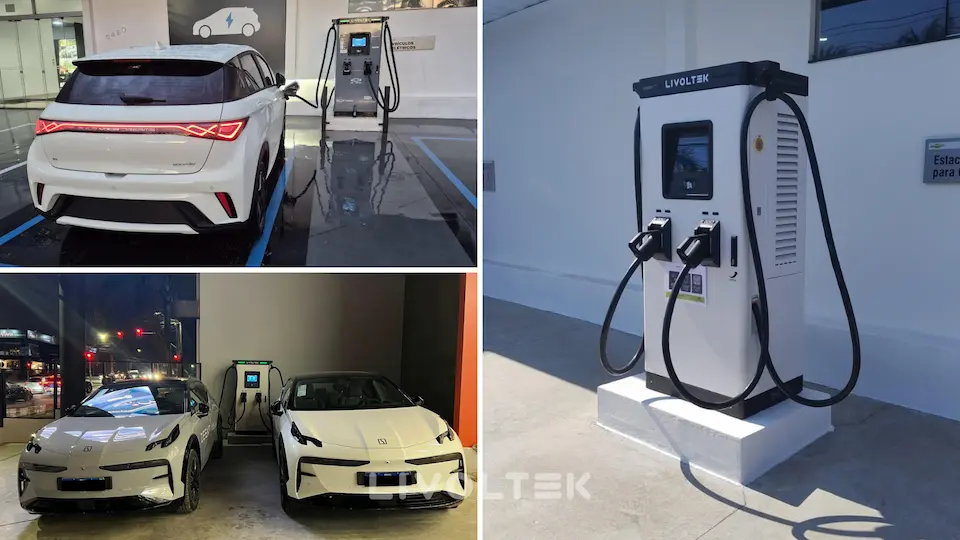
What charging technology cannot solve alone?
Even the most capable charger cannot compensate for every weakness in the surrounding site.
Restricted opening hours, unclear pricing, inaccessible parking spaces, insufficient weather protection, or unresponsive support can still affect the driver experience.
This is why successful public charging requires coordination between charger manufacturers, charging operators, and site owners.
MotionFast provides the high-power, connected, and protected DC charging foundation. The complete experience must then be supported by thoughtful site planning, transparent operations, reliable digital services, and responsive local support.
From Brazil to the global market
The feedback may come from Brazil, but the expectations are universal.
Whether drivers are charging in São Paulo, Madrid, Johannesburg, or Bangkok, they want to know:
Can I find the charger? Will it be available when I arrive? Can I start charging easily? Will the power and price be clear? Is the equipment working reliably? Can I get help if something goes wrong?
A public charger is not successful simply because it has been installed. It is successful when drivers trust it enough to plan their journey around it.
That is the role LIVOLTEK MotionFast is designed to support: turning high-power DC charging equipment into a dependable foundation for everyday electric mobility.