


 Võru, Estonian
Vaabina PV Plant
Project Overview
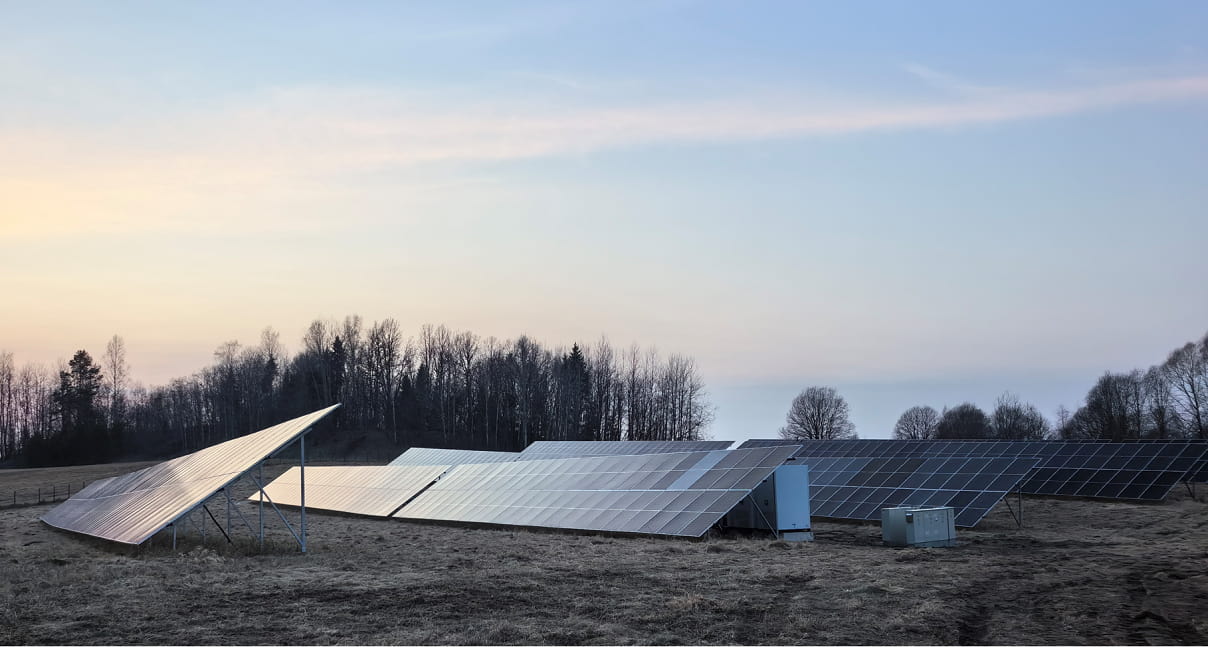
Facing volatile electricity prices and occasional negative power prices across the European energy market, distributed photovoltaic power plants are exposed to unstable revenue and grid connection risks. To maximize PV yield and hedge against market fluctuations, the Vaabina PV Plant in Estonia integrated grid-tied inverters with modular energy storage cabinets to build a coordinated PV and ESS hybrid system. Supported by a third-party EMS scheduling platform, the plant achieves flexible charge-discharge control, enhances power generation stability, and substantially increases overall project profitability.
Core Challenges
Unpredictable power price fluctuations and negative electricity prices impacting revenue
Restricted photovoltaic absorption due to grid capacity constraints
Unstable renewable energy output affecting grid-friendly operation
Difficulty in dynamically balancing PV generation with grid feed-in
Customized PV & ESS Solution
The Vaabina renewable power plant adopts a grid-connected hybrid energy solution consisting of:
9 × 50kW grid-tied inverters
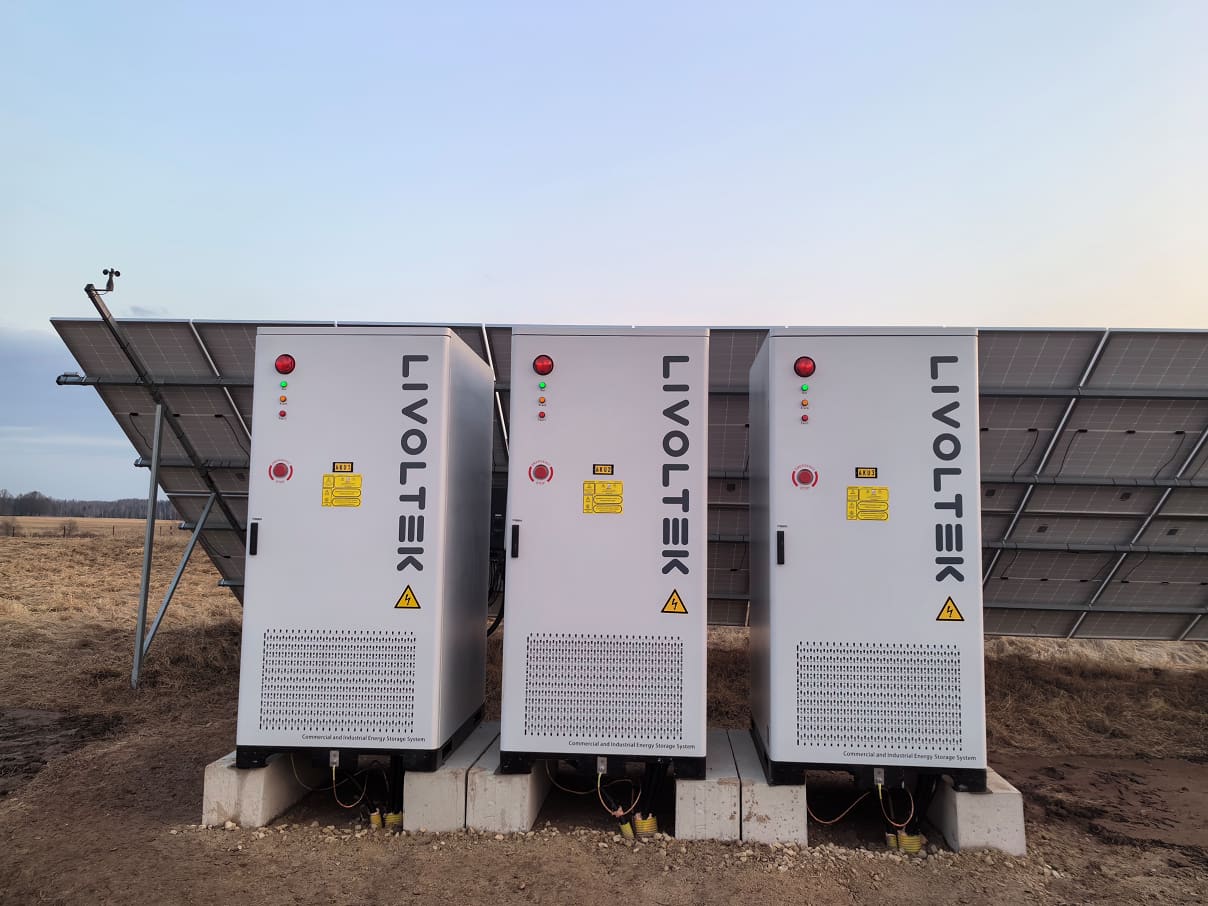
3 × BES-P125X261E energy storage cabinets
This configuration forms a 450kW inverter system paired with 783kWh energy storage capacity.
Equipped with a professional third-party EMS platform, the system enables centralized dispatch and real-time dynamic optimization. The ESS flexibly performs peak shaving, time-of-use shifting, and frequency regulation based on market prices and generation conditions, effectively avoiding negative price periods, improving local PV absorption, and maintaining stable grid-side power output.
Project Configuration
| Parameter | Specification |
|---|---|
| System Capacity | 450kW inverter / 783kWh ESS |
| Core Product | BES-P125X261E Energy Storage Cabinet |
| Device List | 9 × 50kW grid-tied inverters + 3 × BES-P125X261E cabinets |
| Operation Mode | Grid-connected with EMS centralized scheduling |
| Supported Functions | Frequency regulation, time-of-use arbitrage, PV self-consumption |
Key Benefits
Market Risk Hedging – Offset power price volatility and prevent losses caused by negative electricity prices
Frequency Regulation – Deliver reliable ancillary services to support local grid stability
Higher PV Absorption – Store surplus photovoltaic power to reduce generation curtailment
Time-of-Use Arbitrage – Optimize charging and discharging windows to maximize project profit
Intelligent Dispatch – Third-party EMS ensures precise coordination between PV generation, energy storage, and the utility grid