

As electric vehicle adoption accelerates, charging parks and commercial charging sites are under increasing pressure to expand capacity. Yet many projects face the same challenges: insufficient transformer capacity, unstable grid conditions, rising electricity costs, and limited access to renewable energy.
Expanding an EV charging park, however, does not always have to mean costly transformer upgrades or major grid infrastructure reconstruction.
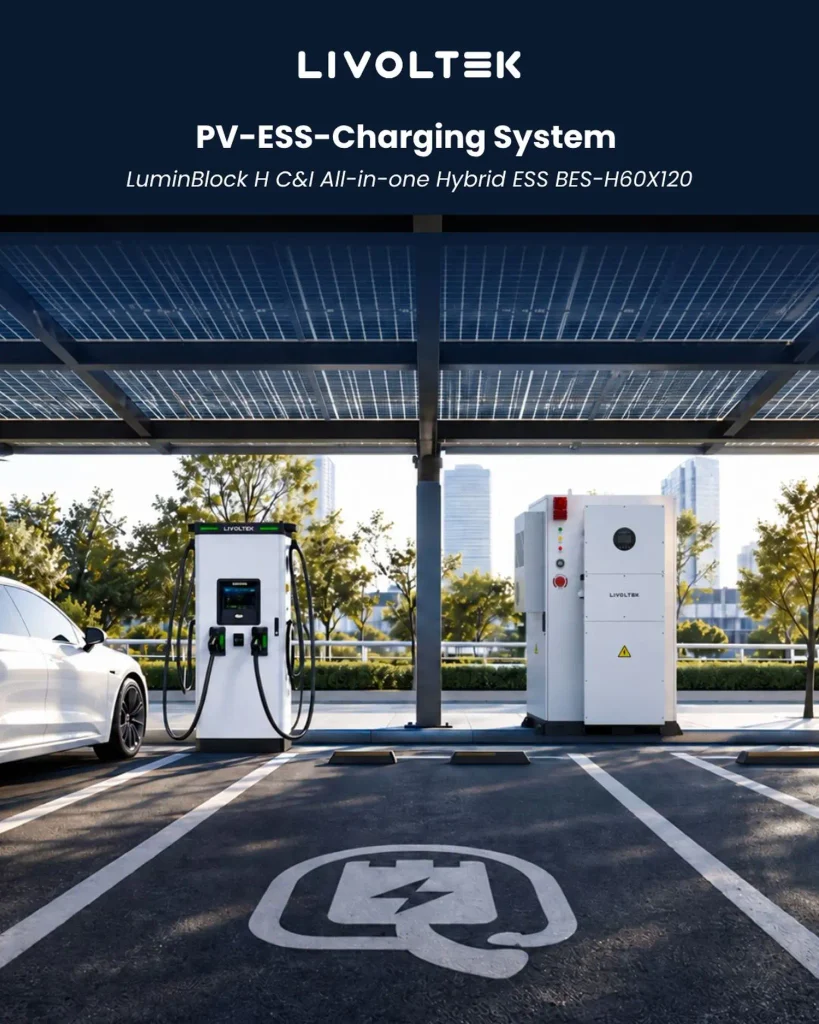
LIVOLTEK’s integrated PV-ESS-Charging Solution combines photovoltaic generation, battery energy storage, EV charging infrastructure, and intelligent energy management into one coordinated system. By optimizing how energy is generated, stored, distributed, and consumed, the solution helps charging site operators expand charging capacity more efficiently while improving energy reliability and long-term project economics.
Overcoming Transformer Capacity Limitations
One of the biggest challenges when adding new EV chargers is the limited capacity of the existing transformer.
High-power charging stations can create significant short-term demand, especially when multiple vehicles are charging simultaneously. In many existing sites, the transformer was not originally designed to support this additional load.
Instead of immediately upgrading the transformer, LIVOLTEK’s energy storage system can act as a virtual capacity expansion unit.
During periods of low electricity demand, lower electricity tariffs, or high solar generation, the battery energy storage system stores available energy. When EV charging demand increases, the stored energy is discharged to supplement grid power.
By combining grid capacity with battery output, the charging station can support higher charging loads without placing excessive pressure on the existing transformer.
This approach can help operators:
- Expand charging capacity faster
- Reduce dependence on transformer upgrades
- Lower infrastructure investment requirements
- Improve utilization of existing electrical assets
- Support future charger expansion more flexibly
Improving Charging Reliability in Unstable Grid Conditions
Grid instability can directly affect the operation of EV charging stations. Voltage fluctuations, limited grid capacity, or temporary power interruptions may reduce charging availability and negatively impact the user experience.
The PV-ESS-Charging architecture introduces an additional layer of energy flexibility.
During the daytime, the system can store energy from solar PV generation and the grid. The stored energy can then be used when grid conditions are weak or when charging demand increases.
By coordinating multiple energy sources, the system reduces dependence on a single power supply and improves the overall resilience of the charging site.
For charging park operators, this means more stable energy availability, fewer operational disruptions, and greater confidence when deploying charging infrastructure in areas with constrained or unstable grids.
Maximizing Solar Energy Utilization
Solar PV can significantly reduce the amount of electricity a charging station purchases from the grid, but solar generation and EV charging demand do not always occur at the same time.
Battery energy storage helps bridge this gap.
When solar generation exceeds immediate charging or site consumption, surplus solar energy can be stored instead of being wasted or exported at a lower value. The stored electricity can later be used during periods of higher EV charging demand or higher electricity prices.
Through this coordinated operation, the LIVOLTEK PV-ESS-Charging Solution helps increase solar self-consumption and enables charging stations to make better use of locally generated renewable energy.
This creates a more efficient energy cycle:
Generate with PV → Store excess energy → Supply EV charging → Optimize grid interaction
The result is greater renewable energy utilization and reduced dependence on grid electricity.
Reducing Electricity Costs Through Intelligent Energy Dispatch
Electricity costs are another major concern for commercial EV charging sites.
Large charging loads can increase peak electricity demand and, depending on the local tariff structure, significantly increase operating expenses.
With intelligent energy management, battery storage can be charged during periods of lower electricity prices and discharged when tariffs or site demand are higher.
The system can also perform peak shaving, reducing the maximum amount of electricity drawn from the grid during high-demand periods.
By coordinating PV generation, battery charging and discharging, grid power, and EV charging demand, the system helps operators optimize energy consumption according to actual site conditions and electricity tariffs.
Potential benefits include:
- Lower peak demand
- Reduced grid electricity consumption
- Better utilization of low-tariff electricity
- Higher solar self-consumption
- Improved overall energy efficiency
- Lower long-term operating costs
From Individual Equipment to an Integrated Energy System
A successful charging park requires more than simply installing solar panels, batteries, and EV chargers.
The real value comes from coordinating these assets as one intelligent energy system.
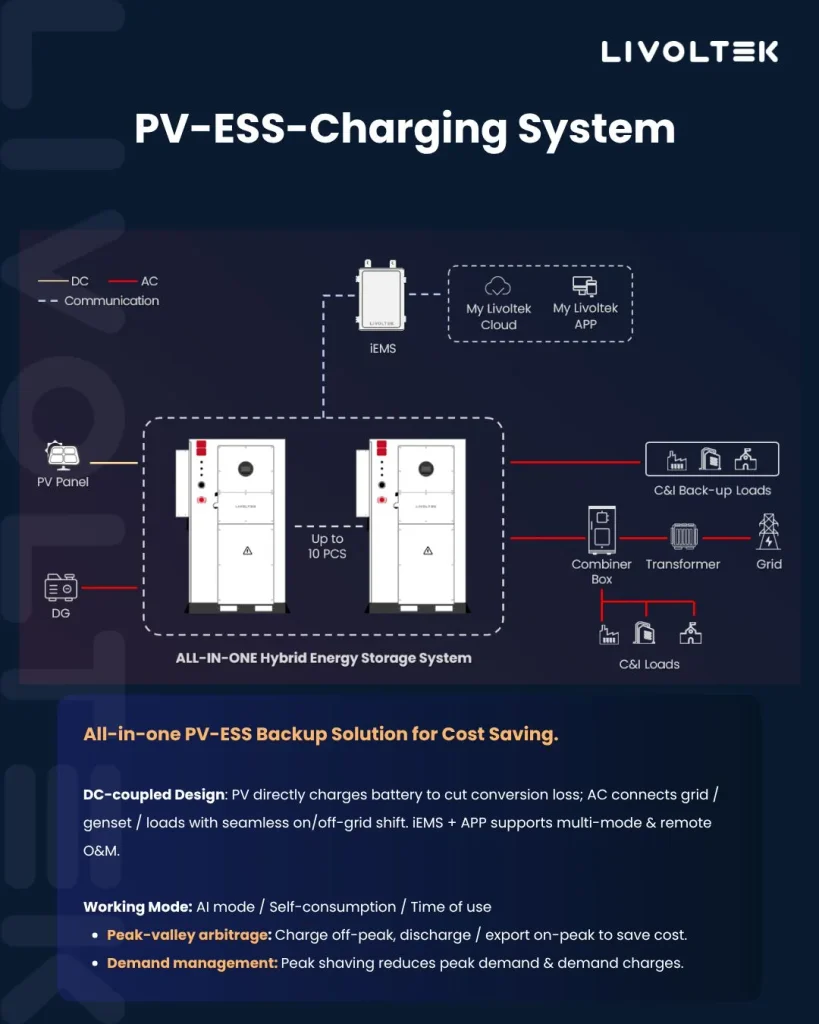
LIVOLTEK integrates PV generation, energy storage, charging infrastructure, metering, and intelligent energy management to provide operators with greater visibility and control over the entire charging site.
Energy can be dynamically allocated according to solar generation, battery state of charge, charging demand, grid capacity, and electricity tariffs.
This integrated approach enables the charging site to respond more effectively to changing operating conditions while creating a scalable foundation for future expansion.
Building More Scalable and Economical EV Charging Infrastructure
As charging demand continues to grow, charging infrastructure must become more flexible, efficient, and energy-aware.
LIVOLTEK’s PV-ESS-Charging Solution helps address three critical challenges facing charging park expansion:
Insufficient transformer capacity, unstable grid conditions, and high electricity costs.
By using battery storage as virtual capacity expansion, maximizing solar energy utilization, improving grid resilience, and enabling intelligent peak shaving and energy dispatch, the solution allows operators to expand charging capacity while making better use of existing infrastructure.
Instead of allowing limited grid capacity to restrict future growth, charging park operators can transform energy storage, solar PV, and intelligent energy management into a scalable energy foundation for EV charging.
Turn limited grid capacity into scalable charging potential — and power every charge with greater efficiency, stability, and intelligence.