

The high-temperature stability of commercial and industrial energy storage systems directly determines PV returns, battery lifespan, and overall project safety. In summer, rooftop PV systems and industrial parks are often exposed to a combination of high ambient temperatures, strong solar irradiance, and high-load operating conditions. In many cases, peak PV generation fully overlaps with extreme temperature periods of 40–45°C.
When conventional energy storage systems have insufficient thermal dissipation capability, high-temperature derating can be triggered. This not only limits the system’s ability to absorb peak daytime PV generation, but also reduces battery charging efficiency. As a result, green electricity that could have been stored for use during evening peak-price periods is wasted. Ultimately, this lowers the PV self-consumption rate, increases electricity costs, and extends the payback period of the energy storage investment.
To address this challenge, the LIVOLTEK LuminBlock H Series Hybrid Energy Storage System is equipped with an intelligent thermal management architecture, enabling full-load operation with 2× PV oversizing at an extreme ambient temperature of 45°C without derating. Even under multiple demanding conditions—intense summer heat, strong irradiance, high PV oversizing, and full-load system operation—the system can consistently receive, convert, and store PV power without limiting output due to overheating.
This is especially critical for energy-intensive C&I users such as factories, industrial parks, commercial buildings, cold-chain logistics facilities, and agricultural processing plants. The more stable the system operation, the more effectively businesses can increase PV self-consumption, reduce grid electricity consumption during peak tariff periods, and improve the long-term profitability of their C&I energy storage projects.
The LuminBlock H Series adopts a dual thermal management architecture combining aluminum nitride heat dissipation with independent dual air ducts, improving overall system thermal management efficiency by up to 30%. This enables full-rated operation with 2× PV oversizing at 45°C without derating, while comprehensively mitigating high-temperature risks from core components to the complete cabinet system. For C&I users, it provides a solid foundation for long-term returns, operational reliability, and system safety.
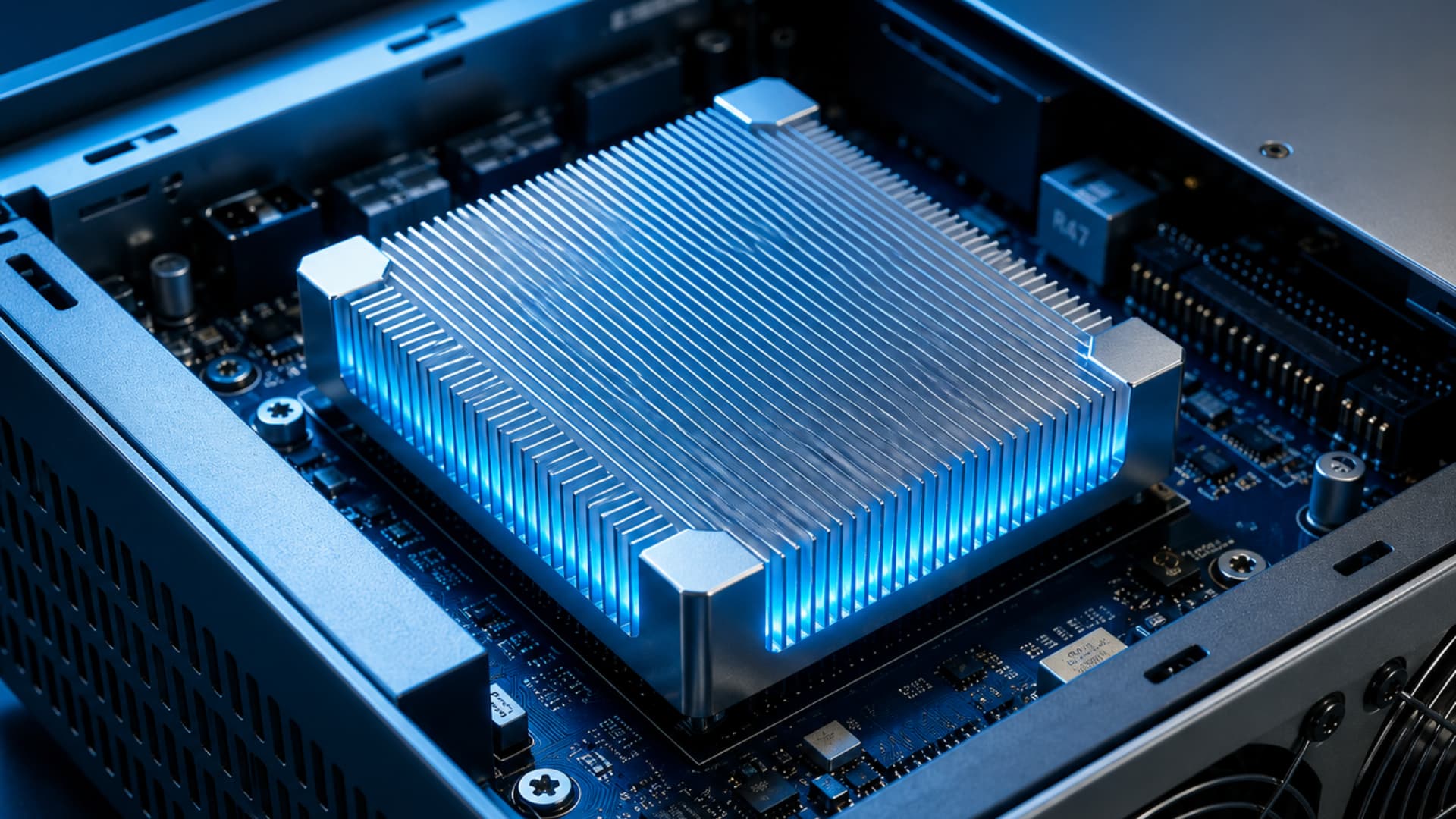
Next-Generation Aluminum Nitride Heat Sink: Enhancing Thermal Conductivity for Core Power Components
For high-heat-generating core components such as inverters and power modules, the LuminBlock H Series Hybrid ESS moves beyond traditional aluminum alloy heat sinks and adopts a next-generation aluminum nitride heat sink.
Compared with conventional thermal materials, aluminum nitride offers significantly higher thermal conductivity. It can be seen as creating a dedicated high-speed thermal dissipation channel for heat-generating core components. Under high-load conditions, such as midday PV oversizing and full-power system charging, the large amount of heat generated instantaneously by power components can be rapidly conducted and dissipated outward. This prevents heat accumulation on component surfaces and avoids the formation of localized hot spots.
The value of this design is clear:
- At the equipment operation level, it prevents core components from overheating and triggering active power derating.
- At the hardware durability level, it reduces long-term thermal stress on power components and minimizes operational fatigue during extended system operation.
- At the fault risk-control level, it significantly lowers the probability of high-temperature shutdowns, short circuits, and component-level failures.
- At the application adaptability level, it supports the dual high-load requirements of C&I scenarios: continuous high-power charging during daytime operation and concentrated peak-period discharging in the evening, maintaining stable hardware performance throughout the full operating cycle.
Independent Dual-Air-Duct Zonal Cooling: Preventing Cross-Zone Thermal Interference and Protecting Battery Lifespan
Beyond thermal dissipation for core components, the internal airflow design of the entire system is equally critical.
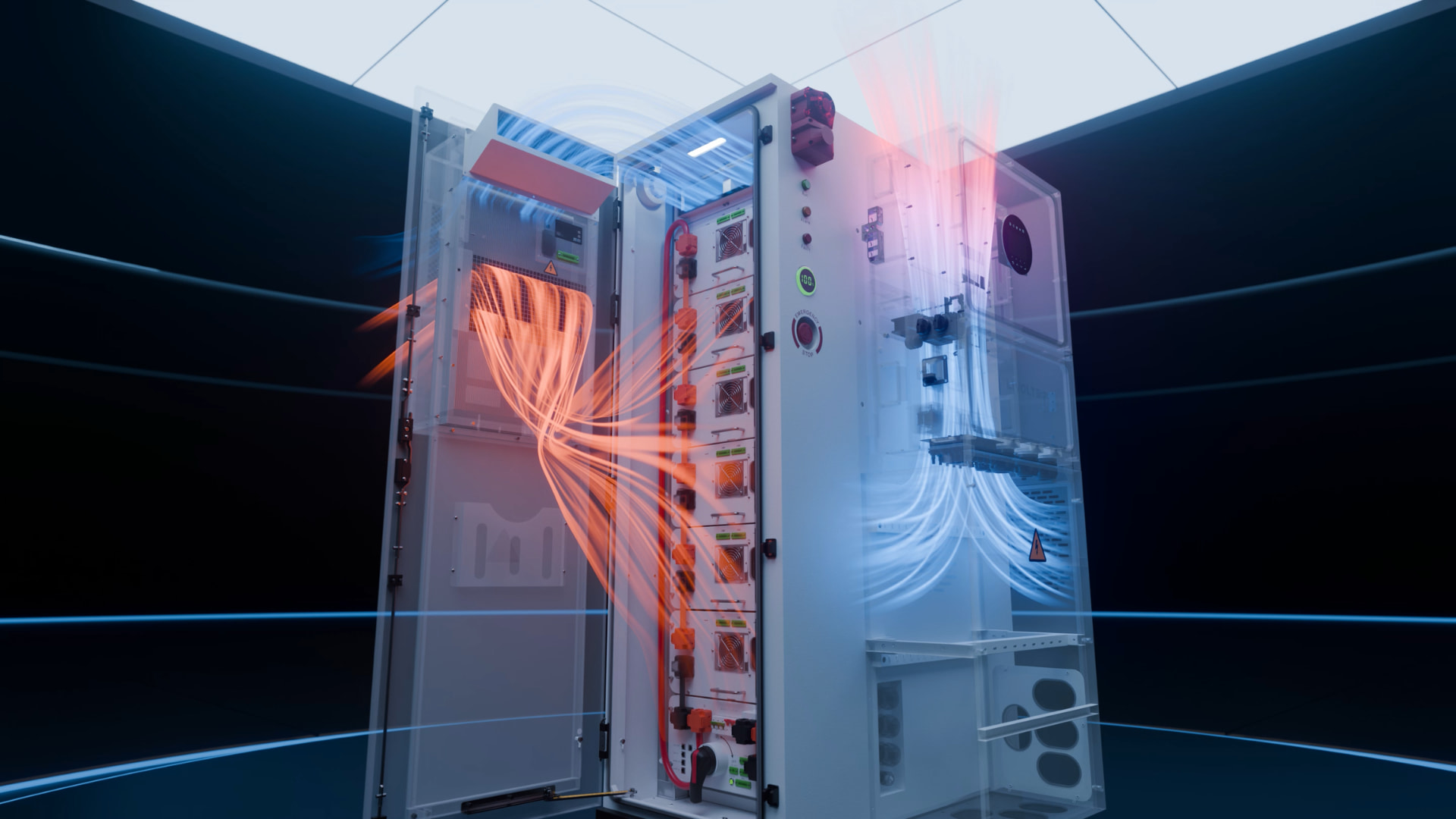
The LuminBlock H Series Hybrid ESS adopts an independent dual-air-duct physical isolation design, fully separating the inverter heat-source zone from the battery thermal control zone. The two airflow channels operate independently, with no air mixing and completely separate heat dissipation paths.
The high-heat-source zone rapidly exhausts inverter waste heat through a dedicated air duct, preventing hot air from recirculating inside the cabinet. Meanwhile, the battery zone uses its own dedicated airflow channel to balance internal temperature distribution and dissipate the endogenous heat generated during battery charging and discharging.
This effectively solves the common issue found in traditional single-air-duct cabinets, where heat from power components can continuously “bake” the battery area. By stabilizing the temperature difference inside the battery compartment and keeping the battery operating temperature within the optimal safe range over the long term, the system helps extend battery service life at the structural level while enhancing overall fire protection and thermal runaway prevention capabilities.
Thermal Management Efficiency Improved by Up to 30%: More Than Just “Better Cooling”
The combination of aluminum nitride thermal-conductive hardware and an independent dual-air-duct architecture creates a synergistic cooling advantage, improving the overall thermal management efficiency of the cabinet by up to 30% compared with conventional industry-standard models.
This figure is not merely a technical specification. It directly translates into lifecycle value for C&I users:
- PV revenue: Peak PV generation fully overlaps with high daytime temperatures. Efficient thermal management ensures that the system can operate with 2× PV oversizing at 45°C without derating, enabling full absorption of peak PV output, preventing the waste of high-value green electricity, and increasing the PV self-consumption rate.
- Cost and O&M: Extended battery and core component lifespan helps reduce future spare parts replacement, downtime, and maintenance costs.
- Safety and risk control: The system mitigates internal heat accumulation and cross-zone thermal interference inside the cabinet, reducing fire safety risks associated with energy storage systems.
- Electricity cost reduction: Stable charging and discharging capability ensures that users can fully store low-cost green electricity and use it to replace expensive grid power during evening peak-tariff periods.
High-Temperature Steady-State Performance: A Core Differentiator for C&I Energy Storage
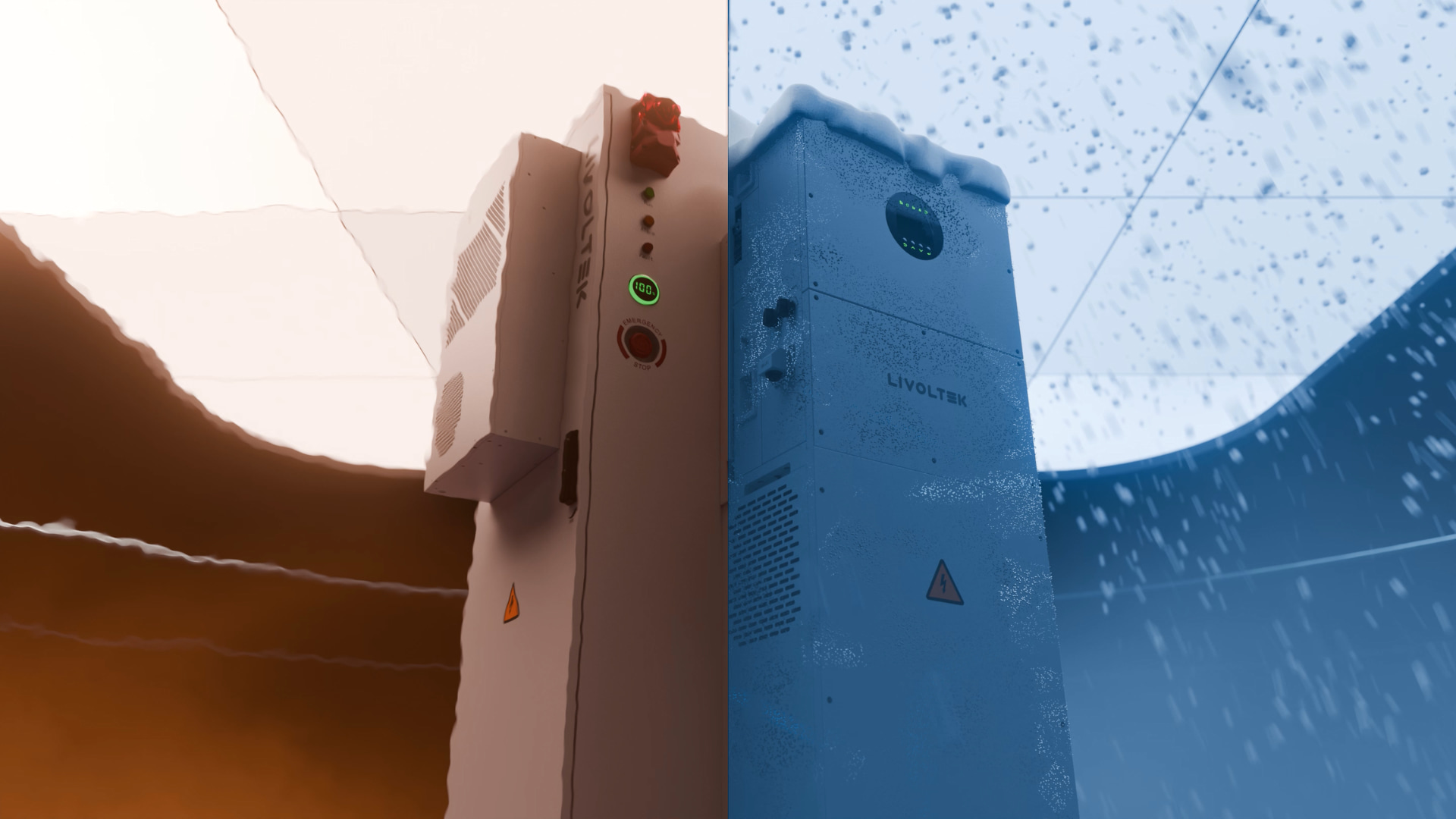
For commercial and industrial energy storage systems, the real test is often not in the laboratory, but in real-world operating environments exposed to high temperatures, strong solar irradiance, and heavy loads.
The LIVOLTEK LuminBlock H Series Hybrid ESS enhances overall thermal management capability through 45°C high-temperature operation without derating, full-rated operation with 2× PV oversizing, aluminum nitride heat sinks, and an independent dual-air-duct design. These features help ensure that the battery operates within a more suitable temperature range.
This not only contributes to extended battery service life, but also further improves system safety, operational stability, and long-term reliability.
For C&I customers looking to increase PV utilization, reduce electricity costs, and strengthen energy resilience, the LuminBlock H Series is not simply an energy storage system. It is a new energy storage solution designed to continuously create value in high-temperature and high-PV-generation scenarios.