

In C&I PV-ESS systems, customers usually focus on battery capacity, inverter efficiency, PV oversizing ratio, on-grid/off-grid switching speed, and investment payback period. However, the factors that truly affect long-term system safety and stable operation often include details that are more easily overlooked, such as PV terminals, connectors, and DC-side wiring connection points.
Although these connection points are small in size, they play a critical role in transmitting PV DC current. Once poor contact, looseness, oxidation, improper crimping, or increased contact resistance occurs, localized temperature may continue to rise, potentially leading to DC arcing, burning, insulation damage, or even electrical fire risks. For factories, commercial complexes, charging stations, farms, and industrial parks, such risks are not only related to equipment safety but also to production continuity, project returns, and long-term asset reliability.
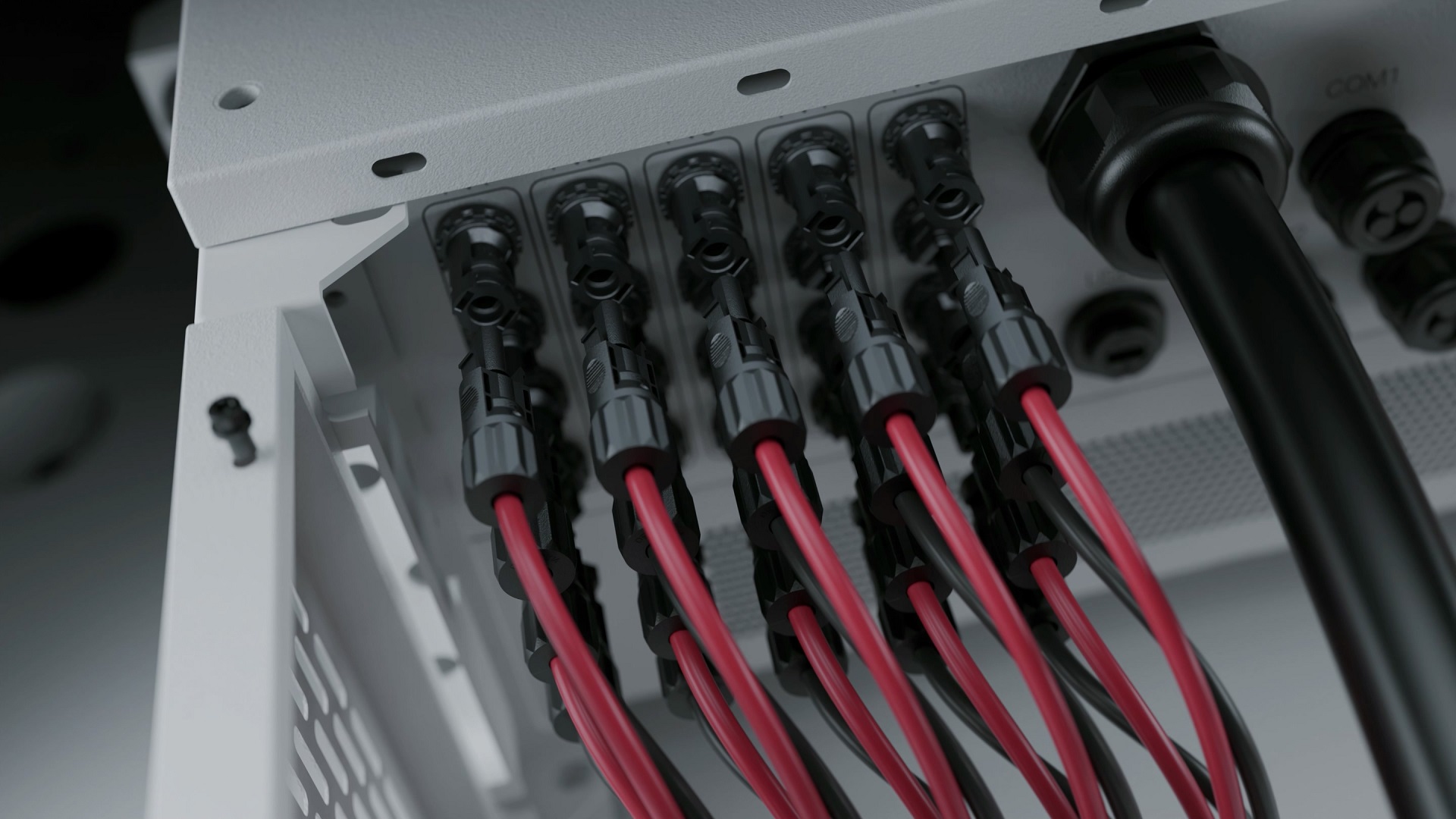
Why Should PV Terminal and Connector Risks Not Be Ignored?
The DC side of a PV system typically contains a large number of connection points. As module power increases, system scale expands, and integrated PV-ESS deployment accelerates in C&I scenarios, the stability of terminals and connectors is becoming a critical part of system safety management.
Data from PVEL and SolarGrade indicate that PV systems contain a massive number of connection points worldwide, and connector-related issues are one of the important causes of PV-related fires in multiple solar markets. In SolarGrade’s inspections of distributed PV systems in the United States, more than half of the projects were found to have safety issues requiring urgent correction, and 40% of those urgent issues were related to field-made or factory-made connectors.
This shows that PV terminals and connectors are not simply auxiliary components. They are important risk points that affect DC-side safety, operational stability, and long-term returns of PV-ESS systems.
Why Do C&I PV-ESS Systems Need Terminal Temperature Monitoring?
Compared with utility-scale ground-mounted PV plants, C&I energy storage systems are often deployed closer to loads and areas of personnel activity, such as factory rooftops, industrial park distribution areas, commercial buildings, EV charging stations, and agricultural processing facilities. Once an unexpected shutdown occurs, it may affect production lines, cold-chain storage, commercial operations, or charging services. If an electrical safety incident occurs, it may also result in higher asset losses and greater O&M pressure.
Traditional manual inspection is necessary, but it is difficult to continuously monitor all terminal connection points online. Some terminal abnormalities do not immediately trigger obvious faults at an early stage. Instead, they may continue to develop through localized temperature rise. By the time system shutdown, component burning, or a fault alarm occurs, the risk has often already expanded.
Therefore, C&I PV-ESS systems need more than passive protection after an incident. They need early-stage identification, warning, and intervention. PV terminal over-temperature detection is an active safety function designed to address this exact pain point.
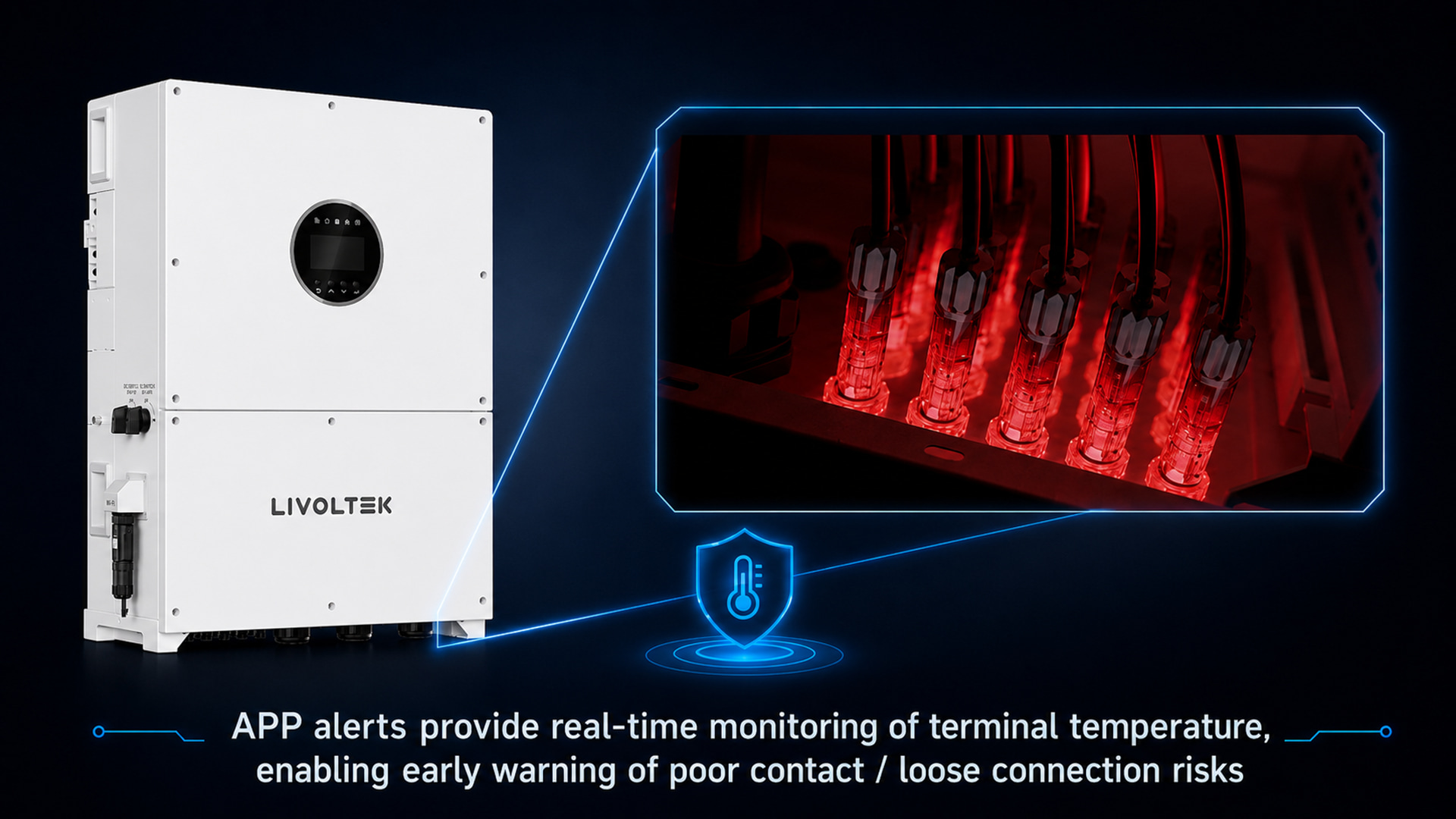
How Does the LuminBlock H Series Enable PV Terminal Over-Temperature Detection?
The LIVOLTEK LuminBlock H Series C&I Hybrid Energy Storage System integrates PV terminal over-temperature detection into its system-level active safety architecture. For hidden risks such as loose terminals, poor contact, oxidation, and increased contact resistance that may cause localized temperature rise, the system can identify risks through online terminal temperature monitoring and provide early warnings before abnormal trends escalate.
This means O&M personnel do not need to wait until terminal overheating causes shutdown, burning, or obvious faults before taking action. Instead, they can intervene while the risk is still at an early stage, checking wiring conditions, terminal tightness, and connector health.
For customers, the value of this function is direct: real-time monitoring of wiring terminal temperature, early warning of poor contact or loose connection risks, online detection to supplement manual inspection, fewer O&M blind spots, and reduced risk of unplanned downtime by addressing terminal overheating before it develops into a system failure.
From Terminal Monitoring to an Active Safety Closed Loop
The terminal over-temperature detection function of the LuminBlock H Series is not a standalone feature. Together with AFCI arc-fault detection, Intelligent String-Level Disconnection, DC isolation, multi-layer short-circuit protection, BMS, and iEMS, it forms an active safety closed loop.
When the system identifies high-risk signals such as abnormal current, voltage fluctuation, arcing, short circuit, or temperature rise at connection points, multiple layers of protection can help assess and manage the risk. Intelligent String-Level Disconnection can reduce the impact of DC-side faults from a system-level issue to a smaller, localized scope, helping isolate the abnormal branch and reduce the possibility of fault propagation to other normal strings, inverter units, or the energy storage system.
From the temperature of a single wiring terminal to the DC-side protection of the entire PV-ESS system, the LuminBlock H Series helps safety management move from manual experience to system-level sensing, online judgment, and early warning.
What Value Can Customers Gain?
- Lower risk of fire caused by poor contact: Real-time monitoring of terminal temperature helps identify hidden risks such as poor contact, loose connections, oxidation, and increased contact resistance in advance.
- Lower O&M costs: Online detection supplements manual inspection, reduces inspection blind spots, and improves daily O&M efficiency.
- Reduced unplanned downtime: Early warning of terminal overheating helps problems be identified and addressed before shutdown occurs.
- Protection of energy returns: Reduced fault impact on PV generation, energy storage charge-discharge strategies, and load power supply.
- Enhanced asset safety: Coordinated with AFCI, Intelligent String-Level Disconnection, DC isolation, and multi-layer short-circuit protection to build a more complete DC-side safety line of defense.
Localized Monitoring Is More Critical Under High-Temperature and High-Load Conditions
In many global markets, C&I PV-ESS systems often operate under real-world conditions where high ambient temperature, strong solar irradiance, and high load occur simultaneously. In summer rooftop PV and industrial park scenarios, PV generation peaks often coincide with 40–45°C high-temperature periods. Through aluminum nitride heat dissipation and an independent AC/DC dual-air-duct thermal management design, the LuminBlock H Series supports full-load operation at 45°C without derating, helping the system maintain stable operation under high-irradiance and high-load conditions.
However, a truly reliable system should not only focus on overall cabinet-level heat dissipation. It must also identify localized abnormalities at connection points. Many DC-side risks do not begin with the temperature of the entire unit. They start from a single terminal, a connector, or a point of poor contact. The significance of PV terminal over-temperature detection lies in identifying the risk while it is still small.
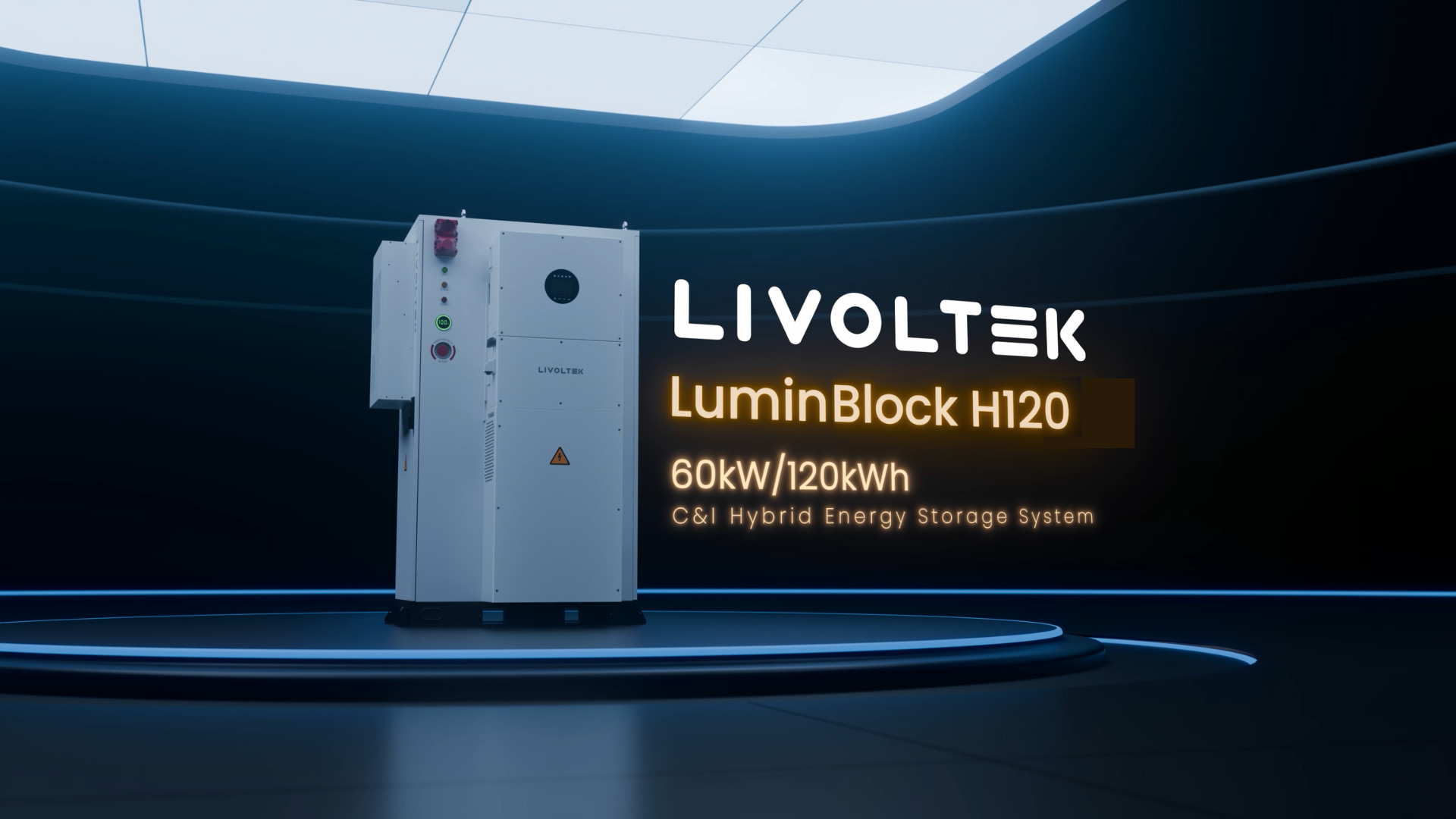
A Safer System Is a More Reliable Energy Asset
The LIVOLTEK LuminBlock H Series adopts a fully integrated 3-in-1 architecture combining PV, energy storage, and diesel generator integration. It integrates a hybrid inverter, STS, BMS, iEMS, and high-voltage LFP batteries into one system. Designed for factories, commercial complexes, charging stations, farms, and industrial parks, it supports multiple operating modes, including self-consumption, zero export, backup power, TOU, demand control, and virtual power plant applications.
While creating energy value, the system builds a more proactive, intelligent, and reliable safety foundation for C&I PV-ESS systems through terminal over-temperature detection, AFCI, Intelligent String-Level Disconnection, DC isolation, and multi-layer protection mechanisms.
The LuminBlock H Series is not just an energy storage device. It is a C&I hybrid PV-ESS solution that helps customers reduce electricity costs, improve power supply security, lower O&M risks, and protect long-term returns.
Discover how the LIVOLTEK LuminBlock H Series improves the reliability of C&I PV-ESS systems through active safety design. Contact us to get product materials or a customized project solution.
https://www.livoltek.com/contact-form/